Beyond Documentation
How do we make care coordination feel human, connected, and manageable?
Reframing the problem
At first, it looked like a data problem. But the deeper issue was human: care managers were drowning in tools that didn’t reflect how care actually happens.
We reframed our design question from:
“How do we track care?”
to
“How do we make care coordination feel human, connected, and manageable?”
That shift helped us prioritize clarity, flexibility, and trust as our design principles.
Showing both care manager and parent perspectives reveals how design decisions affect each side of the care relationship—and where their needs intersect or diverge
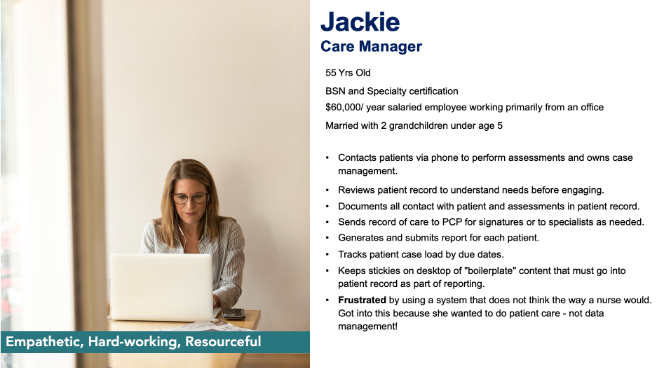
Care Manager Persona
We also looked at the emotional layer: families who felt lost in the maze of specialists, medications, and scheduling
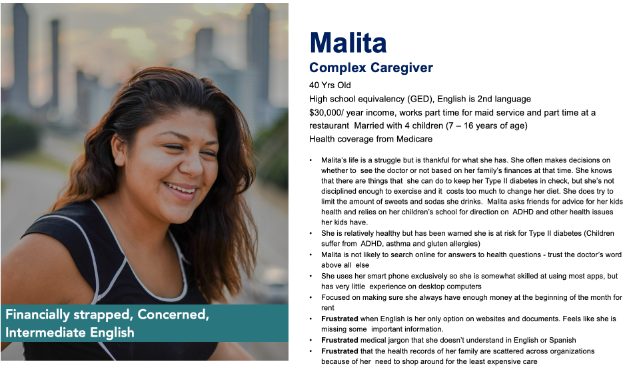
Care Giver/Parent Persona
Designing Around Real Work
Ensuring user voices were central to brainstorming.
Prototyping for Clarity and Connection
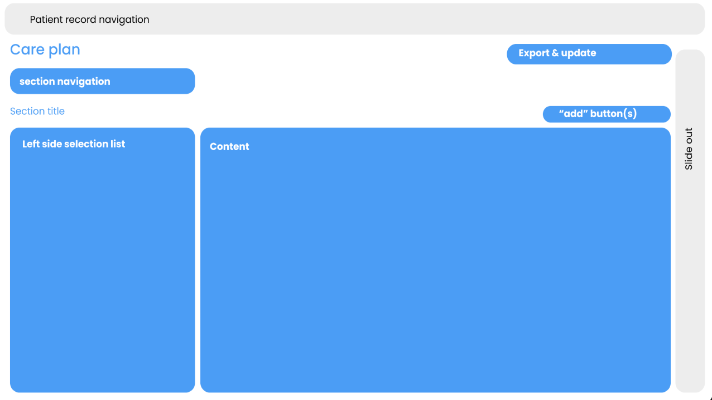
Created and tested multiple layouts for the Care Plan view—exploring how information could surface naturally during real-time calls with families. Each iteration focused on reducing cognitive load and supporting conversation flow.
Each round of testing brought us closer to an experience that felt less like software and more like support.
Mapped how information and actions move between people and tools, highlighting real-world friction points.
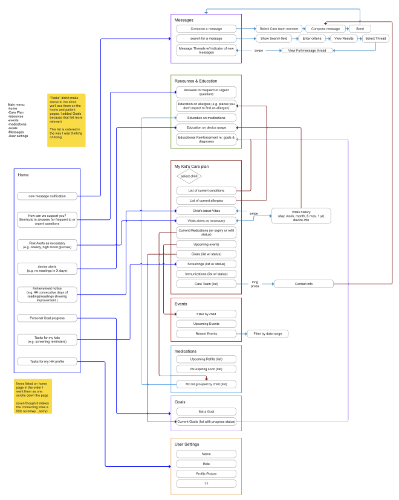
We refined the "zones of work" within the care plan and gradually worked our way toward organizing the whole in greater detail.
The Result
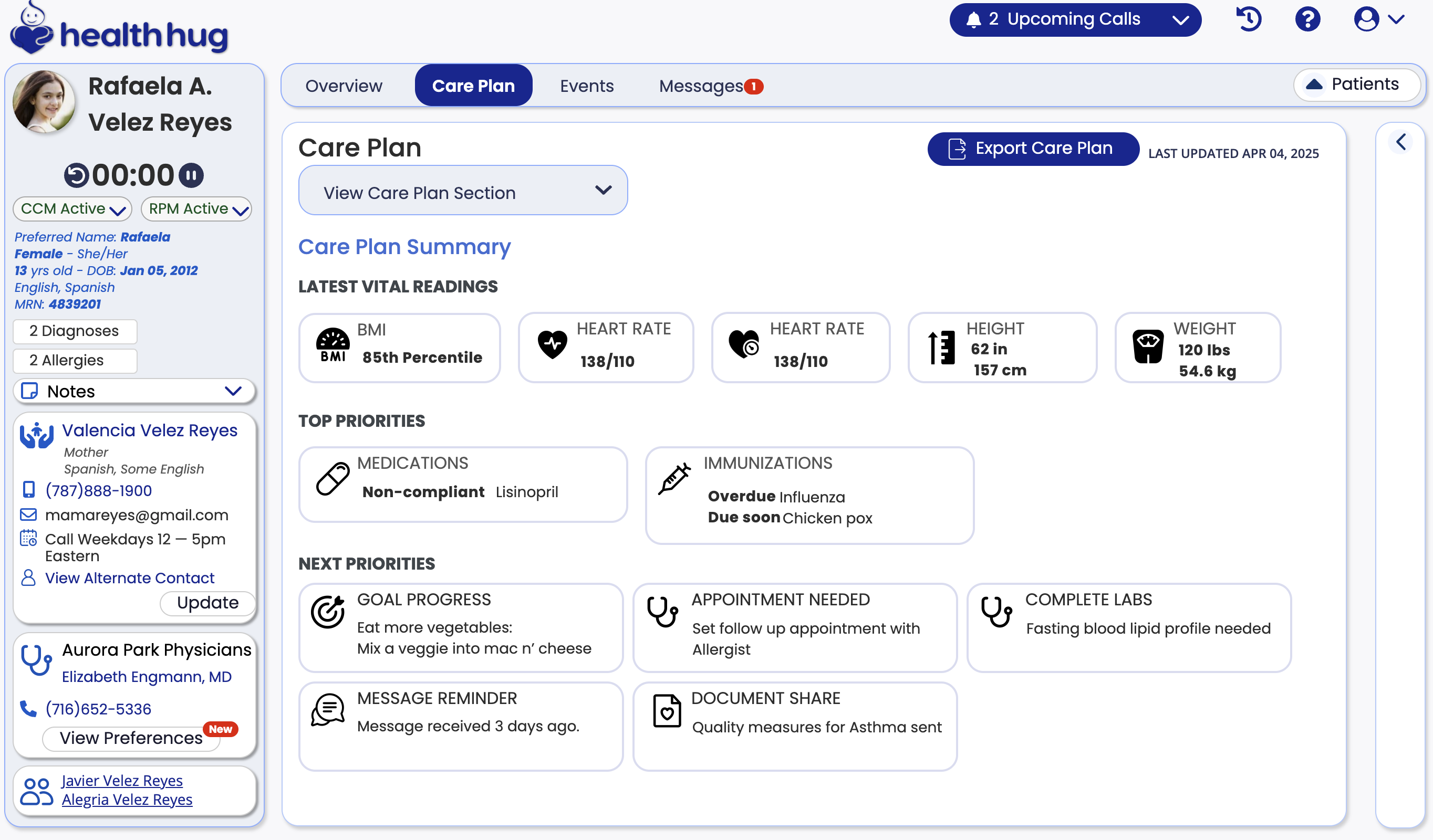
The Care Plan became the first production module in the platform and established the foundation for future releases.
Care plan in context of entire patient record with ‘dashboard’ showing immediate needs and updates
Detail of Care plan showing latest vitals readings from remote patient monitoring
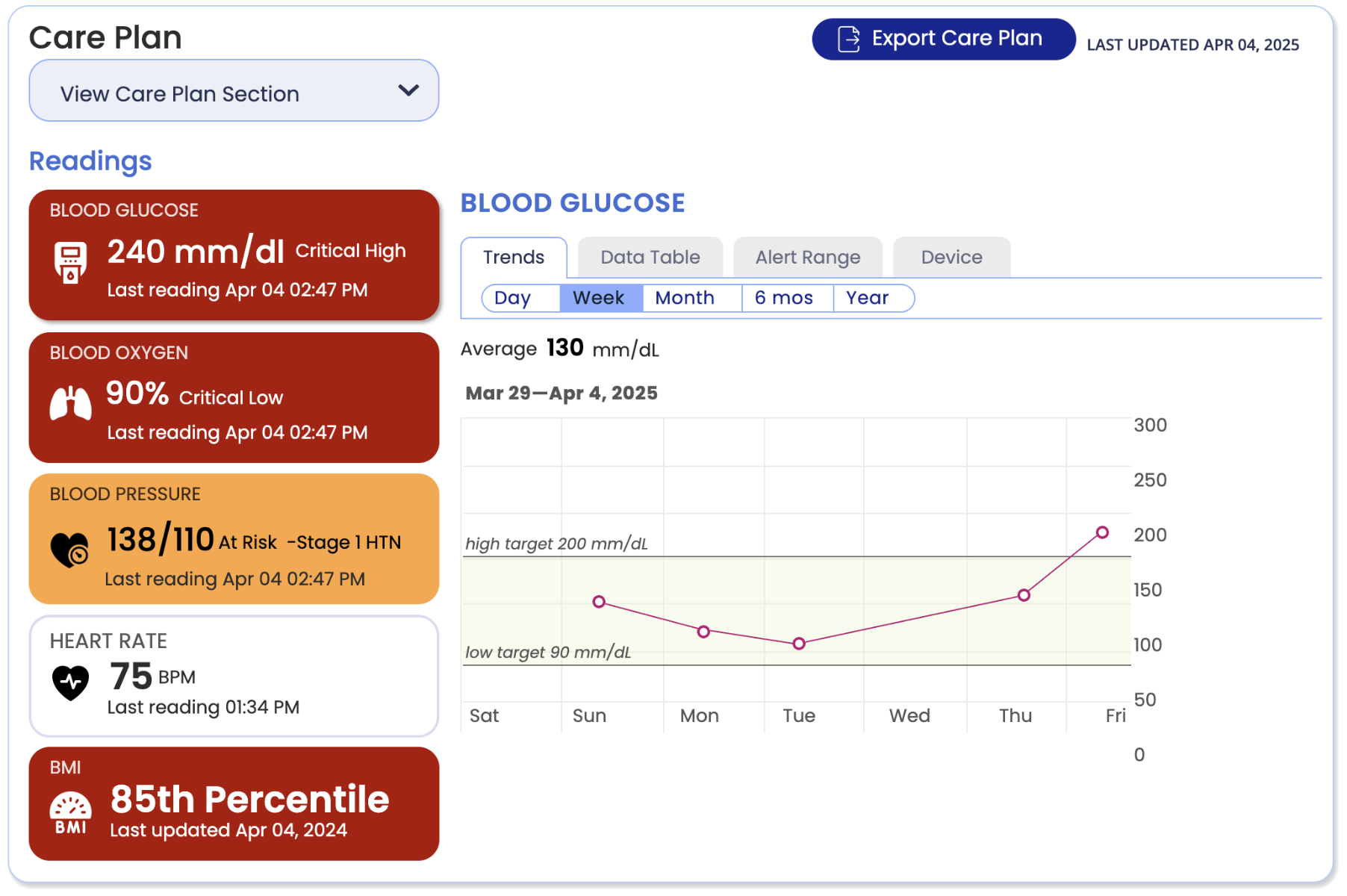
The Care Plan launched successfully and quickly proved the value of a human-centered approach:
- Simplified workflows reduced redundant data entry and improved documentation accuracy
- Modular, intuitive layout allowed faster updates during calls and follow-ups
- Positive pilot feedback from care managers, who described the experience as “streamlined, clear, and finally made for how we actually work.”